
Your first long-term sick employee: every step counts — legally and humanely.
The worry of getting something wrong is justified — and solvable. A clear process takes it off you and your employees.
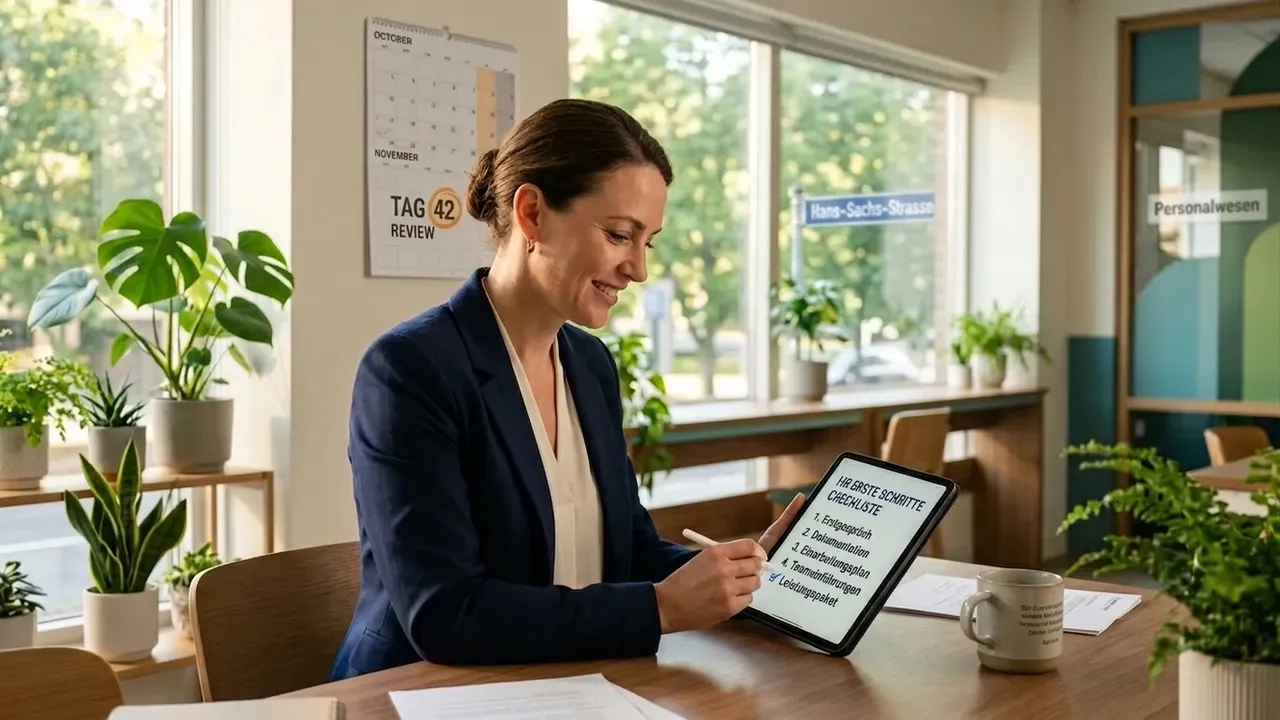
42 days
of sick leave within twelve months — even spread out
from there, a BEM must be offered — § 167 (2) SGB IX
Since 2004
BEM has been a legal duty
for every employer — regardless of size
Voluntary
for your employees
declining is fine — documented cleanly
Contestable
is a sickness-related dismissal without a BEM offer
established case law of the Federal Labour Court (BAG)
Six weeks of sick leave within twelve months — from there, § 167 (2) SGB IX obliges every employer to offer workplace reintegration management (BEM). It's no formality: it's about shaping the way back to work together — before an illness turns into a departure.
The good news: a clear process removes the uncertainty on both sides. If you know the steps, you can act humanely — without losing anything formally.
The clean process
Four steps that build trust
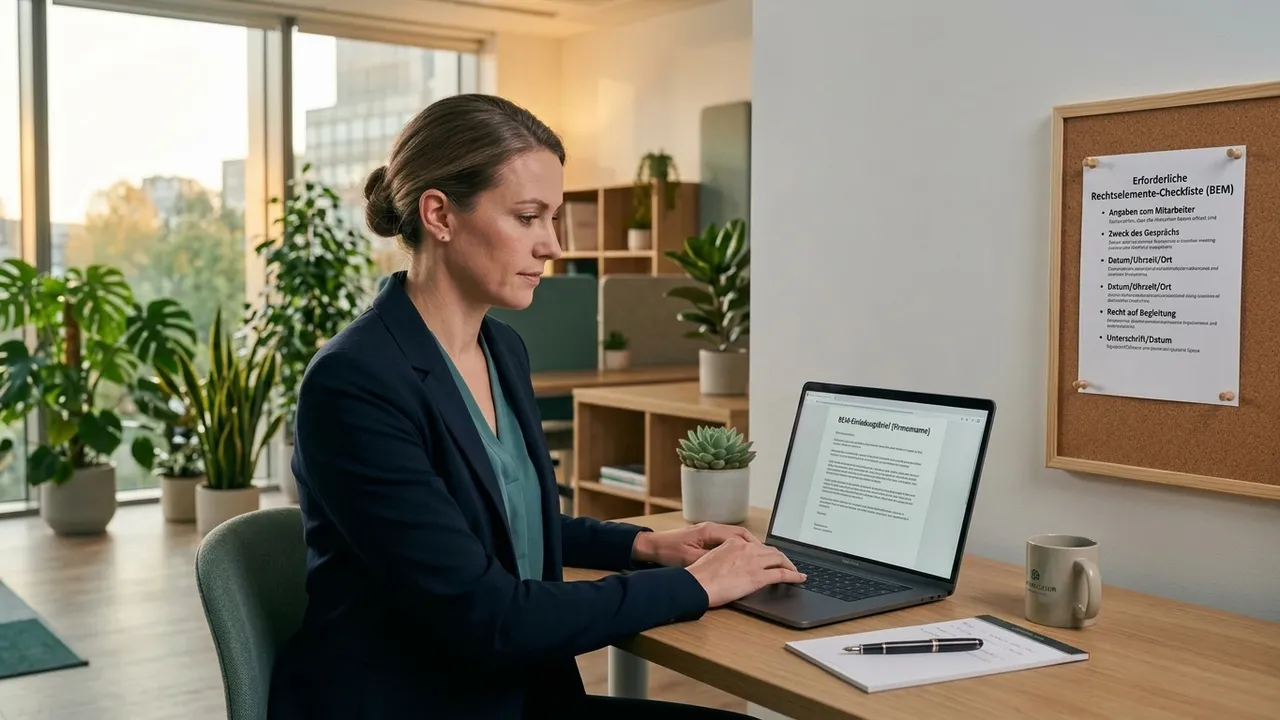
Invitation
In writing, with a clear purpose and notes on voluntariness and data protection. The invitation is the moment that decides trust — templates help you forget nothing.
Conversation
At eye level: what does the return need? Works council, company doctor or a person of trust join — but only if the employee agrees.
Measures
From an adapted workplace to gradual reintegration (the 'Hamburg model'): agreed, scheduled and followed up.
Documentation
Every step recorded, health data kept in a separate BEM file — not in the personnel file. A declined offer is documented too.
How the tool supports you
Structure for the 80 % — specialists for the rest.
EasyBGM detects the 42-day threshold, reminds you of deadlines, ships invitation templates and guides you through conversation, measures and documentation — the structured process for standard cases.
The responsibility stays with you — and for the tricky cases we bring in specialists such as MyBEM. At the right moment, not in the small print.


Frequently asked questions
From when do we have to offer a BEM?+
As soon as someone is unfit for work for more than six weeks within twelve months — in one stretch or spread over several illnesses (§ 167 (2) SGB IX). The duty applies to every employer, regardless of size or industry.
Is the BEM mandatory for employees?+
No. The offer is the employer's duty, participation is voluntary. Declining must not lead to disadvantages — but it should be documented, because you must be able to prove the offer.
What do we risk without a BEM offer?+
There is no fine — but it gets difficult before the labour court: without a BEM offer, a sickness-related dismissal is much harder to uphold under established BAG case law. And you give away the chance to keep your people.
Who takes part in the BEM conversation?+
In principle, employer and employee. Works council, representative body for severely disabled persons, company doctor or a person of trust join only with the employee's consent — they keep control over the circle.
How do we handle the health data?+
Health data is specially protected (Art. 9 GDPR): a separate BEM file, kept apart from the personnel file, access only for those involved, processing only with consent. This separation belongs in the process from the start.
Dig deeper
Key guides on BEM-Kompass
Our knowledge hub answers the detailed questions — free and without sign-up.




This page refers to German law (SGB IX, BAG case law).
The first case is on your desk?
Start with structure: deadlines, invitation and process are set up in minutes.